 UltraViolet Solstice
 UltraViolet Lens Platform
 UltraViolet Equinox


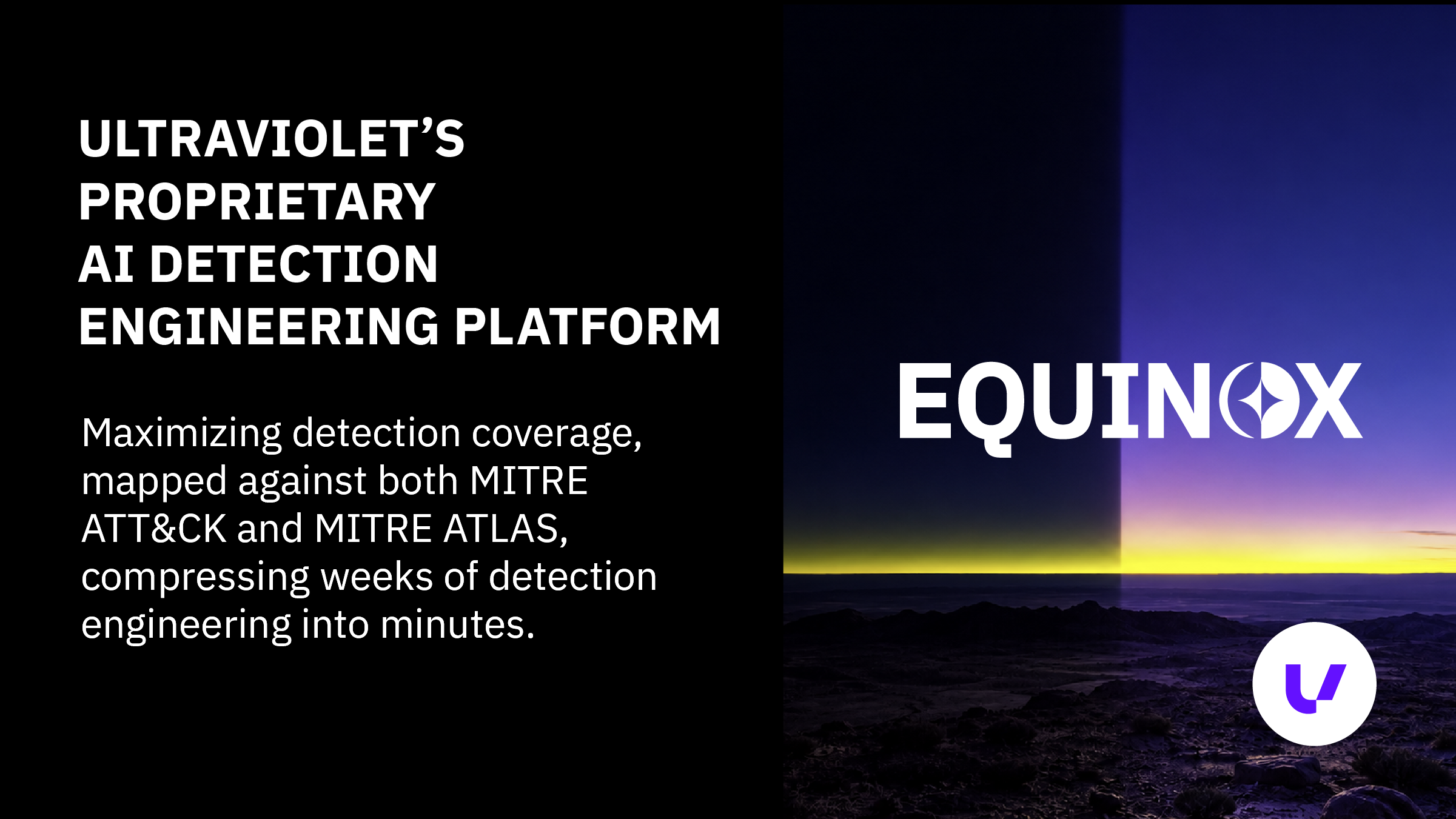 UltraViolet Cyber Launches Equinox, a Proprietary AI Detection Engineering Platform
 UltraViolet Cyber Launches Solstice
In 2023, Cl0p's MOVEit campaign broke into more than 2,000 organizations. Encryption-free extortion had barely emerged, and "AI-enabled" meant WormGPT writing cleaner phishing emails. Three years later, one deepfake video call has moved $25 million, and crews that log in and never encrypt run at industrial scale. Nobody could have named those changes in 2023, but every one of them followed the same patterns.
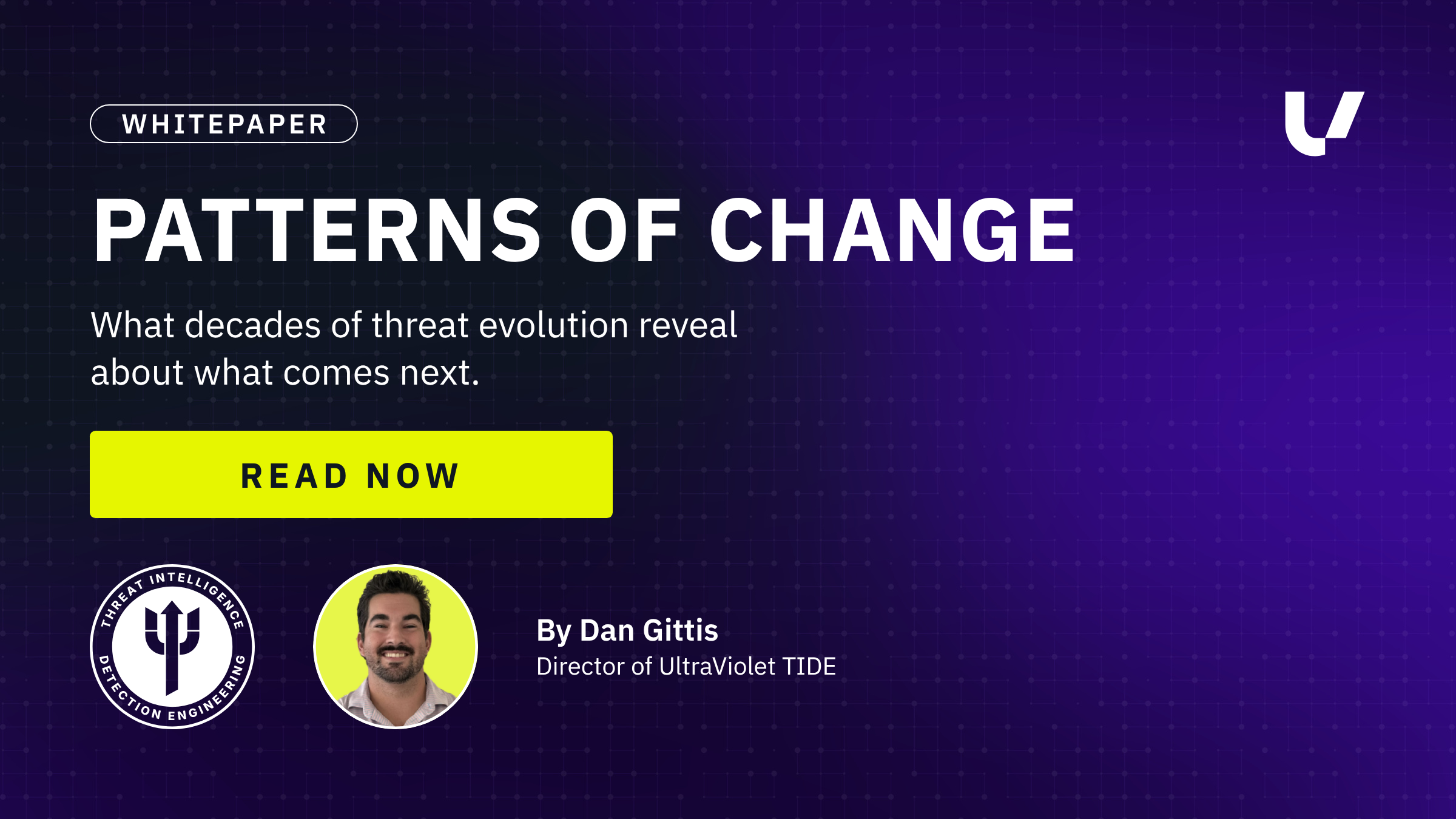
Dan Gittis, Director of UltraViolet TIDE, traces those patterns through extortion, payment, initial access, stealth, regulation, and AI, then connects them to established criminology theory. Once you can see them, you can forecast the next move.
What's inside
- 7 evolutions in how attackers get paid, get in, and stay quiet, from CryptoLocker to ClickFix to AI-assisted deepfakes
- 5 patterns drawn from criminology: displacement, risk and reward, simpler attacks, hiding in plain sight, and a dark web market that lowers the barrier to entry
- 5 lessons for defenders, including how to anticipate displacement, defend the boring paths, and assume attacker competence
- 7 forecasts through 2029, each with the evidence, an indicator to watch, and an alternative hypothesis, rated on a published probability scale

About the Author
Dan Gittis leads UltraViolet's Threat Intelligence and Detection Engineering (TIDE) team. Before UltraViolet, he led M&T Bank's strategic cyber intelligence team and worked with Accenture's MxDR Global Intelligence Operations team. Earlier, he was a threat intelligence analyst for the Philadelphia Police Department, working with the FBI, U.S. Coast Guard, and Department of Homeland Security on maritime cybersecurity.