The AI SOC Hype Cycle
AI agents won't fix a broken SOC. UltraViolet CEO Ira Goldstein on why Detection-as-Code, unified telemetry, and adversary simulation are the AI SOC strategy.
Find flaws in AI Systems
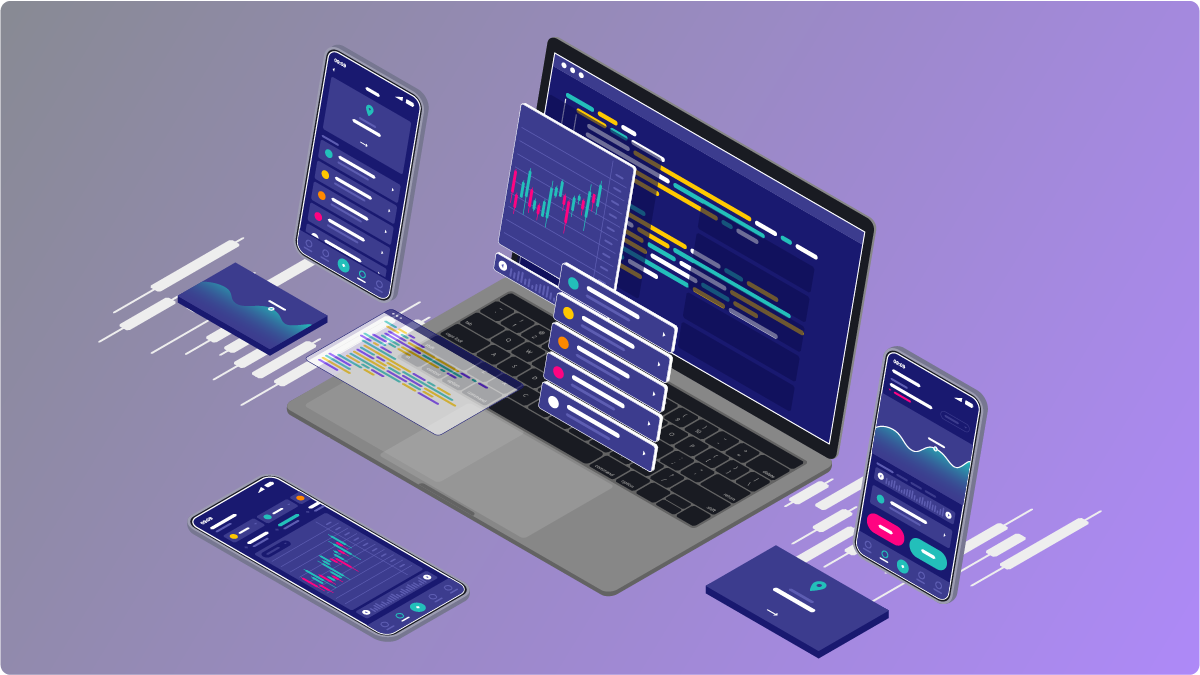
Find flaws in web, mobile, and IoT applications.
Expose risks in AWS, Azure, and GCP environments.
Live-fire exercises to sharpen detection and response.
Time-boxed security assessments across networks, apps, and infrastructure.
Simulated attacks to test detection and incident response.
Named security experts integrated seamlessly into your team.
Real-time detection and automated threat response.
24x7 monitoring and response by expert analysts.
Detection-focused SIEM migration without visibility gaps.
UltraViolet's proprietary AI platform powering all application penetration testing.
Unified security platform powering all UV services.
Cross-platform toolkit for advanced red team ops.
UltraViolet Cyber provides security services across the AI lifecycle, combining strategy, threat modeling, adversarial testing, monitoring, and training to support secure AI adoption.
Learn how a major U.S. airport operator achieved 24/7 threat detection, improved security maturity, and ...
Secure your code, infrastructure, and deployment pipelines before attackers exploit them.
AI agents won't fix a broken SOC. UltraViolet CEO Ira Goldstein on why Detection-as-Code, unified telemetry, and adversary ...
AI Governance by DesignAn Architecture-Aware Approach for Embedding Governance into AI Systems
Feb 3-5, 2026
Mar 19, 2026
Feb 19, 2026
UltraViolet Cyber is a practitioner-led MSSP delivering offensive and defensive security to Global 2000 and Federal clients. Built by former intelligence operators, we unify application security, red teaming, detection, and engineering under one roof. Our UV Lens platform replaces silos with integrated, outcome-driven operations.
Most teams assume their SIEM is working. Our practitioners routinely find that roughly 40% of active detection rules are stale, duplicated, or haven’t fired in 90 days — and that critical log sources were quietly dropped to manage licensing costs. Our SIEM Health Check tells you exactly what you’re missing.
AI introduces a distinct operational risk profile embedded directly into enterprise systems, data pipelines, and decision flows. As models, agents, and automation scale across the organization, security must operate continuously and in alignment with how AI behaves in production environments.
Privileged API chaining
Goal hijacking and unintended execution
Prompt injection attacks
Lateral movement through AI integrations
Data leakage via workflow automation
Model theft and IP exfiltration
GPU and compute targeting
Supply-chain compromise of third-party models
Data poisoning and model manipulation
Hallucinated outputs influencing business decisions
Exposure of regulated or sensitive customer data
Abuse of generative interfaces
Regulatory scrutiny over automated outcomes
Legacy SIEMs charge by data volume. As cloud, SaaS, and ephemeral workloads grow, the bill scales linearly. Teams are forced to choose: pay more, or drop log sources and create blind spots.
Static correlation rules generate floods of false positives. Analysts spend hours chasing disconnected alerts instead of investigating real threats.
Your SIEM was built before multi-cloud was default. Coverage of AWS, Azure, GCP, Okta, M365, and SaaS platforms is often shallow, inconsistent, or relies on manual connector work that breaks silently.
Custom parsers, regex tuning, infrastructure management, server upgrade cycles. When your team spends more than 20% of capacity keeping the SIEM running instead of building detections and hunting adversaries, the platform is working against you.
Older SIEMs alert but cannot act. No automated timelines, no integrated playbooks, no connection to ticketing or response tooling. Every containment action — isolating a host, revoking credentials — requires multiple manual steps across multiple tools. MTTR stays high, and leadership keeps asking why.
The SIEM Health Check is a practitioner-to-practitioner working session. It’s for the people who actually operate detection infrastructure, manage analyst workflows, and own security outcomes day to day.
When tier-1 spends 30+ minutes manually stitching logs to understand a single alert — or when high-priority events get deprioritized because the queue is overwhelming — you have a structural detection problem. The Health Check surfaces exactly where the signal-to-noise ratio breaks down and how to fix it without sacrificing coverage.
Cloud workloads, SaaS platforms, and identity sources often look covered but aren’t. If data sources have been deprioritized to control licensing costs, or detection content hasn’t been formally tuned in over a year, you have blind spots. We map them against your actual environment and MITRE ATT&CK — not assumed coverage.
If your contract renews within 18 months and leadership needs to decide between renewing, optimizing, or migrating, a Health Check gives you the evidence to make that case — cost model, coverage gaps, migration readiness, and a path forward you can defend to your CISO or board.
When more than 20% of your engineering capacity goes to writing parsers, tuning rules, and managing SIEM infrastructure rather than building detections, the platform is working against your team. We quantify that cost and identify where automation or architecture changes would reclaim it.
Most teams have never done a formal review of whether their SIEM delivers on the original business case. If you’re choosing which log sources to ingest based on cost rather than risk — or you can’t confidently answer “what would we miss if this went dark?” — the Health Check is the answer.
We secure your AI journey across eight foundational domains.
Unlike siloed providers, we connect offensive validation with continuous defense — creating a closed feedback loop between testing and monitoring.
AI adoption typically shows up in a consistent set of enterprise initiatives. Each one benefits from clear security outcomes that keep innovation moving.
Privileged access abuse, data leakage, unintended actions.
AI penetration testing and adversarial evaluation to identify security gaps across models, APIs, and workflows.
Expanded attack surface, misconfigurations, inconsistent controls across environments.
Validate AI pipelines and cloud integrations through continuous testing and targeted assessments.
High-value infrastructure targeted for IP theft, supply-chain compromise, and disruption of critical compute resources.
Continuous monitoring of AI platforms to detect and investigate anomalies, plus risk-informed hardening guidance.
Model manipulation, data poisoning, and regulatory exposure as AI impacts business outcomes.
Adversarial model evaluation to understand behavior under malicious inputs and corrupted data, paired with governance and controls.
Customer data exposure, prompt injection abuse, and reputational risk from AI-generated errors or misuse.
Test AI-enabled applications and monitor production signals to detect misuse patterns and runtime anomalies.
AI security is defined in production environments where models, agents, and automation interact with live systems and data. UltraViolet brings operational rigor, adversarial depth, and continuous monitoring to ensure those systems perform securely at scale.
A senior UltraViolet practitioner will review your submission and reach out within one business day to schedule. This is a working session with someone who builds and operates SIEMs at enterprise scale.
Verified inventory of what data is actually being ingested — confirmed vs. assumed coverage
Full review of which detections are active, stale, duplicated, or generating noise with no value
Honest assessment of detection signal quality and analyst alert burden
Architecture review covering data flows, coverage gaps, and operational design
Findings playback from a senior practitioner with a recommended path forward
Not every MSSP is ready for AI.
Download this guide to learn the six capabilities your provider needs to secure AI systems and how to assess your current coverage.